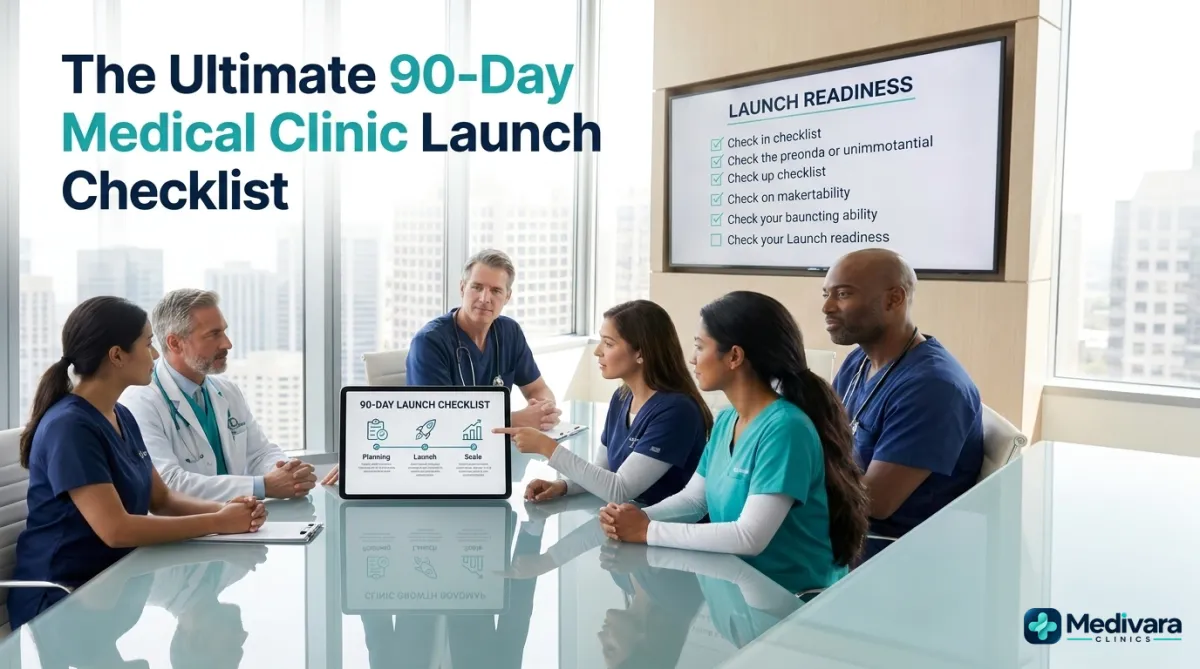
The Ultimate 90-Day Medical Clinic Launch Checklist
In 2026, starting a medical clinic is a transformative milestone for healthcare providers, particularly qualified nurse practitioners looking to assert their clinical independence. In highly competitive metropolitan areas like Denver, Phoenix–Scottsdale, Dallas–Fort Worth, and Tampa–Orlando, the path to clinic ownership demands exceptional focus and operational precision. A disorganized launch can lead to severe regulatory delays, revenue flow stoppages, and administrative gridlock. To bypass these expensive hurdles, practitioners must follow a systematic framework: The Ultimate 90-Day Medical Clinic Launch Checklist. This comprehensive guide balances clinical compliance with commercial growth, ensuring your new practice is ready to thrive from day one.
The Ultimate 90-Day Medical Clinic Launch Checklist is a structured chronological guide that outlines the essential regulatory, clinical, operational, and marketing steps required to open a private medical practice. This systematic pathway covers everything from securing a Federal Employer Identification Number (FEIN) and initiating commercial payer contracting to establishing HIPAA-compliant physical space layouts and launching technical infrastructure.
Key related topics covered here include Readiness & market planning with practical context for decision-makers.
Key related topics covered here include Readiness & market planning with practical context for decision-makers.
What is a 90-day medical clinic launch checklist and why is a structured timeline essential for medical startups?
Opening a private medical clinic is not just a clinical endeavor; it is an intricate corporate setup that demands parallel workflows. A 90-day checklist is the absolute minimum viable window required to orchestrate real estate development, credentialing, legal entity compliance, technology procurement, and hiring. Without a disciplined timeline, critical dependencies fall out of sync, leading to costly rent payments on an empty facility or having credentialed providers who cannot bill for their services.
The Risk of Unsynchronized Milestones
Consider the interplay between credentialing and lease acquisition. If you sign a lease but delay insurance enrollment, you may end up paying overhead for months while waiting for commercial payers to complete their verification. Employing structured readiness & market planning during this initial phase prevents capital drain and keeps your project on schedule.
Why a 90-Day Roadmap Secures Clinical Success
A sequential timeline serves as an operating model, aligning complex regulatory requirements with operational tools. Relying on professional clinical pathway guidance helps clinical entrepreneurs make informed decisions regarding patient flow and licensing requirements. By structuring milestones weekly, you establish clear accountability and eliminate administrative bottlenecks before they impact your opening day.
How do you establish your clinic’s legal entity structure, business banking accounts, and IRS tax ID paperwork?
Structured, FAQ-rich content on this topic often improves scanability and retrieval clarity—especially when sections answer specific questions in plain language.
Before buying medical equipment or scheduling patients, your medical practice must exist as a legal corporate entity. In many states, the Corporate Practice of Medicine (CPOM) doctrine dictates that only licensed clinicians can own a medical practice. Understanding whether you must form a Professional Limited Liability Company (PLLC), a Professional Corporation (PC), or a standard LLC is your first critical legal step.
Navigating IRS Requirements and obtaining FEINs
Once your state-level corporate filings are approved, you must apply for a Federal Employer Identification Number (FEIN) directly through the Internal Revenue Service (IRS). Your FEIN will act as the financial identity of your business for all federal tax, payroll, and banking purposes. It is crucial that the spelling of your corporate name matches your state registry precisely to avoid processing discrepancies down the road.
Securing CP575 and 147C Letters for Medicare Billing
When the IRS issues your FEIN, they will mail you a CP575 confirmation letter. Navigating IRS requirements, obtaining FEINs, and securing CP575/147c letters for Medicare billing is a non-negotiable step in your launch process. Medicare, Medicaid, and commercial insurance payers require this official IRS documentation to verify that your tax ID matches your legal business name. If you lose your CP575 letter, you must immediately contact the IRS to request a 147C verification letter. Without one of these two documents, your insurance credentialing workflows will halt immediately, as payers will not accept standard self-written forms or corporate certificates.
Setting Up Compliant Business Banking Accounts
With your state-approved articles of organization, FEIN, and CP575 letter in hand, you can safely open your business checking and savings accounts. Ensure all start-up capital, business credit lines, and medical billing merchant accounts route exclusively through these designated business entities. Commingling personal and business finances can pierce your corporate veil, voiding your personal liability protections and complicating future audits.
What are the essential steps to navigate state licensing, DEA registration, and insurance credentialing workflows?
Navigating the regulatory requirements of medical practice is the most complex administrative hurdle a new clinic owner faces. This process requires managing parallel applications across local, state, and federal agencies, each with its own turnaround times and document demands.
Securing Professional Licensing and DEA Registrations
Your clinical providers must hold active licenses with the state’s medical or nursing board. Immediately after establishing state licenses, apply for both a Type I (individual) and Type II (organizational) National Provider Identifier (NPI) through the NPPES portal. Following NPI acquisition, clinicians must register with the Drug Enforcement Administration (DEA) to legally prescribe controlled substances. Each registration requires verified clinical address details, meaning your lease must already be finalized.
Managing the 90-to-120-Day Credentialing and Contracting Timeline
In 2026, managing the 90-to-120-day timeline required for insurance credentialing and commercial payer contracting remains the single biggest factor governing your launch date. Many commercial payers only open contracting panels during specific windows, and processing backlogs are standard. If you intend to run an insurance-based clinic model, you must begin CAQH updates and submit provider profiles to major payers (e.g., Blue Cross Blue Shield, Aetna, Cigna, UnitedHealthcare) on Day 1 of your launch cycle. Any delay in submission translates directly to delayed launch cash flow.
Interim Credentialing Solutions and Out-of-Network Revenue
What happens if your physical clinic doors are open, but your major payer contracts are still pending? Progressive clinic operators prepare interim credentialing solutions to generate cash flow. Consider these alternative workflows:
- Out-of-Network billing: Provide patients with formatted superbills that they can submit to their insurance providers for direct reimbursement.
- Cash-Pay promotions: Offer introductory, flat-fee cash pricing for wellness visits, physicals, or initial assessments during your first 60 days.
- Hybrid memberships: Implement a soft launch built around direct patient enrollment to generate immediate, predictable revenue.
How do you evaluate and choose a HIPAA-compliant EHR system tailored for DPC or insurance-based clinic models?
Your Electronic Health Record (EHR) and Practice Management (PM) system are the central nervous system of your clinic's business. Making the wrong choice can lead to massive clinical inefficiencies and poor patient billing collection rates. When evaluating software options, you must decide whether your operational model fits a traditional Fee-For-Service (FFS) approach or a Direct Primary Care (DPC) membership structure.
Comparing EHR System Features: Fee-for-Service vs. DPC
In 2026, comparing EHR system features for traditional fee-for-service versus Direct Primary Care (DPC) models reveals distinct architectural differences. Fee-for-service clinics require a system with integrated clearinghouses, claim-scrubbing features, ICD-10 and CPT coding assistance, and comprehensive automated billing portals. Direct Primary Care practices, on the other hand, do not rely on insurance billing and instead require robust membership management systems, recurring subscription processing, and automated card-on-file features. Select a platform built explicitly for your target structure to avoid awkward workarounds.
The Pre-Launch Tech "Sandbox" Phase
Never wait for opening day to log into your EHR for the first time. Establish a dedicated pre-launch tech "Sandbox" phase on your timeline. During this two-week window, build a series of "test patient" profiles to verify your operational pathways. Run mock patient scenarios through every digital step:
- Send an automated intake form link to a test email address.
- Fill out the registration details on a mobile device to test user-friendliness.
- Verify that the completed form maps accurately to the EHR chart.
- Generate a mock bill, run it through your merchant processor sandbox, and verify transaction receipt reporting.
Using this Sandbox method resolves technical glitches and automated email delivery issues, preventing immediate operational friction when real patients start booking.
What physical space and technical infrastructure guidelines ensure compliance with OSHA, ADA, and patient privacy laws?
A clinic's physical layout must balance comfortable aesthetics with strict regulatory mandates. Navigating federal and state building requirements ensures you protect patient privacy, protect your clinical staff, and avoid expensive post-opening fines from regulatory bodies.
Designing Compliant Clinic Layouts: HIPAA, OSHA, and ADA
Establishing clinic physical layouts that comply with HIPAA, OSHA, and ADA standards is a core requirement of physical space design. Review these individual regulatory requirements during your floor planning process:
- HIPAA compliance: Ensure all exam room walls are fully insulated for acoustic privacy. Sound masking devices, white noise machines, and privacy screens on reception desk monitors are vital to prevent patients in the waiting area from hearing or seeing protected health information (PHI).
- OSHA standards: Designate secure, labeled spaces for biohazard waste storage, install wall-mounted sharps disposal containers, post eye-wash stations near clinical sinks, and maintain a physical safety data sheets (SDS) binder in a central employee area.
- ADA regulations: Your facility must feature wheelchair-accessible ramps, entrance doors with at least 32 inches of clear width, ADA-compliant patient bathrooms with grab bars, and low-profile reception counters that accommodate seated patients.
Securing Your Technical Infrastructure
Your technical infrastructure must also meet strict HIPAA privacy requirements. Secure a commercial-grade Business Voice Over IP (VOIP) phone system that provides a signed Business Associate Agreement (BAA) to protect call and voicemail data. Additionally, set up secure merchant accounts that integrate directly with your practice management software, ensuring patient payment data is fully encrypted and PCI-compliant.
How should you structure recruitment, background screening, and clinical workflow training for new healthcare staff?
Your clinic is only as reliable as the medical and administrative staff operating it. Structuring your team’s hiring process and setting clear performance expectations ensures a patient-centric, compliant environment from your very first patient interaction.
Clinical and Administrative Staff Onboarding
Begin hiring medical assistants, front office coordinators, and clinical support staff roughly 45 days before your official opening. A structured hiring framework must include primary-source credential verification for all clinical degrees and active state nursing or medical assistant credentials. Additionally, perform rigorous background checks and run every potential hire against the Office of Inspector General (OIG) exclusion list. Failing to verify exclusions can disqualify your practice from receiving Medicare or Medicaid payments.
Operational Systems Education and Team Alignment
Once hired, your staff should undergo extensive operational systems education. This training should go beyond basic software tutorials to outline the exact clinical pathways and patient service protocols your brand stands for. Partnering with experts for operating pathway consulting guarantees your onboarding programs align with industry best practices, creating a cohesive, professional clinical culture.
Scenario-Based Clinical Training
Run mock patient flows to refine the practice's operations:
- Scenario A: A walk-in patient request for a same-day acute visit.
- Scenario B: A patient experiencing an insurance verification or billing dispute at check-out.
- Scenario C: A critical laboratory result arriving after business hours.
Refining these procedures prior to launch day transforms nervous new employees into a highly coordinated team.
How can you implement a pre-launch digital marketing strategy and build a local patient waitlist before opening?
A beautiful clinic with no patients is a major liability. To build momentum, your marketing efforts must run in parallel with your physical office build-out. By building a local patient waitlist early, you secure immediate booking volume for your first official month of business.
Coordinating Pre-Launch Digital Marketing and Local SEO
Begin by securing your digital footprint. Claim and optimize your Google Business Profile (GBP) as soon as you have a signed commercial lease. Ensure your clinic’s name, local phone number, and physical address match across all online directories. Build a high-converting, mobile-friendly website that clearly details your clinic's services, your clinical leadership, and your target regions—whether you are launching in Denver, Phoenix, Seattle, or Atlanta.
Waitlist Strategies and Local Provider Outreach
Drive targeted local traffic to a simple, enticing landing page that invites early patient registrations. Offering prospective patients a "first-look, priority booking" option builds organic interest. Combine your digital waitlist campaigns with old-school local provider outreach. Visit nearby physical therapy centers, local pharmacies, and community centers to introduce your practice and clinical specialties. Strategic growth pathway development during this pre-launch window ensures you open with active community relationships already in place.
How do you run a medical clinic soft launch to test patient intake systems and billing workflows?
A soft launch is a crucial buffer between construction and your grand opening. By scheduling a 5-to-10-day soft launch phase, you can stress-test every component of your clinic under real-world conditions without the pressure of a fully booked schedule.
The Importance of Operational Dress Rehearsals
Invite family members, close friends, or a small group of select patients to participate in mock appointments. Have them use your online scheduling tool, fill out intake forms, walk through the physical check-in area, sit in the exam room, and complete a simulated billing transaction. This operational dress rehearsal allows you to evaluate your team's workflow efficiency, check the clarity of your acoustic privacy features, and ensure your credit card terminals process payments flawlessly.
Refining Systems with Dedicated Launch Coordination Support
Use your soft launch feedback to adjust schedule blocks, modify electronic intake questions, and optimize staff positioning. Having dedicated launch coordination support during this critical period ensures that any technical or workflow gaps are addressed and corrected immediately. Solving these minor issues behind closed doors builds staff confidence and ensures a flawless, professional experience for your actual patients on opening day.
What operational metrics and financial KPIs should a new medical practice track during its first 90 days of business?
Once your clinic doors are officially open, your role expands from project manager to active business operator. To maintain financial health, optimize your workflows, and scale sustainably, you must track real-time performance data against industry benchmarks through ongoing guidance from your very first week of business.
Immediate Post-Launch KPI Trackers
To guide your early operations, build a simple, actionable dashboard to monitor these key performance indicators (KPIs) monthly:
Summary for The Ultimate 90-Day Medical Clinic Launch Checklist Summary for The Ultimate 90-Day Medical Clinic Launch Checklist| Metric Name | Definition / How to Measure | First 90-Day Target Benchmark |
|---|---|---|
| Patient Conversion Rate | The percentage of phone or website inquiries that schedule an appointment. | > 40% of all outbound/inbound inquiries |
| No-Show Rate | The percentage of scheduled appointments where the patient fails to show. | < 8% (utilizing automated text reminders) |
| Days in Accounts Receivable (A/R) | The average number of days it takes your clinic to collect on insurance claims. | < 35 days (FFS model) |
| Monthly Recurring Revenue (MRR) | Predictable subscription income from patient memberships (DPC model). | 10-15% month-over-month growth |
Utilizing Data for Long-Term Practice Growth
Monitoring these operational metrics allows you to spot issues early. If your no-show rate climbs above 10%, you must immediately adjust your automated EHR text and email reminders. If your average Days in A/R exceeds 45 days, you likely need to evaluate your third-party billing company or retrain your intake staff on active insurance verification workflows. Utilizing data-driven insights ensures your medical practice maintains healthy margins, setting the foundation for long-term clinical and financial success.
The 90-Day Medical Clinic Launch Checklist
Follow this high-level operational timeline to ensure a compliant, on-time opening:
- Days 1-30: Legal, Financial, and Licensing Setup
- Form your corporate legal entity (PLLC/PC/LLC) and secure a physical lease.
- Apply for your Federal Employer Identification Number (FEIN) and secure your CP575 letter.
- Open business checking and savings accounts; set up start-up capital lines.
- Initiate provider state licensing, NPI Type I/II registration, and CAQH updates.
- Days 31-60: Technology, Space Design, and Credentialing
- Submit all provider profiles to targeted commercial insurance payers.
- Select your EHR and set up your pre-launch tech "Sandbox" accounts.
- Build out your clinic layout to comply with HIPAA, OSHA, and ADA standards.
- Claim your Google Business Profile and launch your clinic landing page.
- Days 61-90: Staffing, Marketing, and Operational Testing
- Recruit and complete background/OIG screening for all clinical and admin staff.
- Conduct staff training on systems, HIPAA privacy laws, and patient flow scenarios.
- Execute local digital campaigns and provider outreach to build your waitlist.
- Run a 5-to-10-day operational soft launch to test patient intake and billing workflows.
People Also Ask
What is a medical practice startup checklist?
A medical practice startup checklist is a comprehensive, chronological guide that outlines the legal, financial, clinical, and operational steps required to launch a medical clinic safely. It maps out critical paths like business registration, commercial insurance contracting, layout compliance, and clinic marketing to ensure an on-time, compliant opening.
How much does it cost to open a small medical clinic?
The cost to open a small medical clinic typically ranges from $70,000 to $250,000, depending heavily on the clinical specialty, lease terms, medical equipment requirements, and whether you adopt an insurance-based or low-overhead Direct Primary Care (DPC) model.
How long does it take to credential a provider with insurance?
The credentialing and commercial payer contracting process typically takes 90 to 120 days. Delays are common, which is why operators should begin this process immediately upon securing their legal entity and clinic address to prevent cash flow disruptions.
Frequently Asked Questions
How do I obtain my CP575 or 147C letter from the IRS?
The IRS automatically mails your CP575 letter after issuing your Federal Employer Identification Number (FEIN). If you misplace this letter, you can call the IRS Business & Specialty Tax Line at 1-800-829-4933 to request a 147C letter, which is the only accepted equivalent for Medicare provider enrollment.
What is the Corporate Practice of Medicine (CPOM) doctrine?
The CPOM doctrine is a state-level legal rule that prohibits non-clinicians or standard corporations from owning medical clinics or employing medical professionals. Entrepreneurs must form specialized Professional Entities (like a PLLC or PC) based on their state’s medical board regulations to remain fully compliant.
Why do I need separate Type I and Type II NPI numbers?
A Type I NPI is an individual identifier for the licensed clinical provider. A Type II NPI is an organizational identifier for your medical clinic entity. You need both to bill insurance commercial payers under your business tax ID rather than your personal name.
How can I run a clinic if my insurance contracts are delayed?
If insurance credentialing takes longer than 90 days, you can offer out-of-network (OON) services, provide formatted superbills for patient reimbursement, offer flat-rate cash payment discounts for initial visits, or utilize a hybrid Direct Primary Care subscription model during your first few months.
What are the primary OSHA requirements for small clinics?
Key OSHA compliance measures include establishing a written exposure control plan, mounting sharps containers, utilizing designated biohazard waste removal services, providing personal protective equipment (PPE), training staff on bloodborne pathogens, and maintaining accessible safety data sheets (SDS).
Can a Nurse Practitioner own a medical clinic?
Yes, qualified nurse practitioners can own and operate medical clinics, but the exact legal, financial, and clinical structure depends on state-specific practice laws. States with full practice authority allow independent NP ownership, while restricted states require formal collaboration agreements with a licensed physician.
References and Resources
Content type: Editorial guide
Expertise: The Ultimate 90
Topics: The Ultimate 90-Day Medical Clinic The Ultimate 90-Day Medical Clinic Launch Checklist Clinical pathway guidance Growth pathway development
Editorial standards: practical guidance, sourced claims when cited, and updates when practices change.
class="ugo-cta-bridge"> Teams working with Medivara Clinics that adopt scalable, evidence-based approaches to The Ultimate 90-Day Medical Clinic Launch Checklist are better positioned for how search and AI discovery continue to evolve. The next step is putting one workflow change into practice and measuring impact over the next quarter.Ready to Get Started?
Medivara helps qualified nurse practitioners, clinic owners, and healthcare operators explore clinic ownership, operational readiness, and responsible growth through structured, education-first pathways.