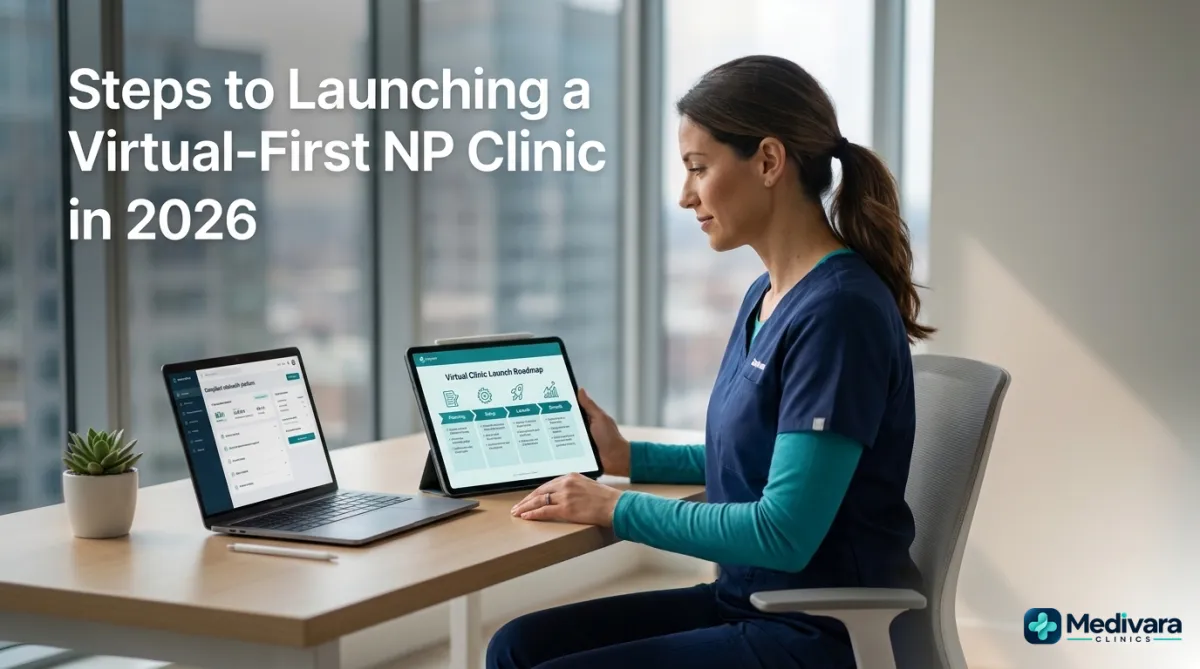
Steps to Launching a Virtual-First NP Clinic in 2026
Establishing an independent clinical practice is a major milestone for advanced practice registered nurses (APRNs). As healthcare delivery models continue to shift rapidly toward digital interfaces, a virtual-first practice represents one of the most efficient, scalable, and patient-centric routes to clinic ownership. However, moving from an in-person, employed clinical role to an independent business owner requires more than clinical expertise; it demands a systematic approach to legal, operational, and financial infrastructure.
At Medivara Clinics, we believe in providing a clearer path to clinic ownership and growth. If you are a qualified nurse practitioner in expanding markets like Phoenix, Scottsdale, Denver, or Colorado Springs, navigating the complexities of independent practice can feel overwhelming. This guide is designed to deconstruct the essential milestones required to transition safely and successfully into your own virtual-first clinic in 2026.
Steps to Launching a Virtual-First NP Clinic in 2026 — The core steps include evaluating market readiness, navigating state-specific practice authority, establishing clinical and growth pathways, designing a HIPAA-compliant technology stack, structuring professional business entities, and coordinating a compliant launch. Together, these steps allow nurse practitioners to build a sustainable, legally sound virtual practice.
Key related topics covered here include Readiness & market planning with practical context for decision-makers.
Key related topics covered here include Readiness & market planning, especially Steps to Launching a Virtual-First NP Clinic in 2026, with practical context for decision-makers.
Key Aspect 1: Steps to Launching a Virtual-First NP Clinic in 2026 Essentials
Launching a virtual-first nurse practitioner clinic begins with rigorous readiness & market planning. Before investing in electronic health records or marketing, an aspiring clinic owner must systematically evaluate both their personal readiness and the target market's viability. This initial planning phase protects your capital and aligns your clinical experience with actual market demand.
Defining Your Clinical and Business Readiness
To establish a successful virtual-first practice, you must honestly assess your comfort level with independent decision-making and digital business operations. Clinical experience is vital, but operating a business requires mastering administrative workflows, cash flow management, and patient communication systems. Ask yourself whether you are prepared to balance clinical care with the daily operational responsibilities of an independent business.
Market Planning Across Regulatory Jurisdictions
Market planning in 2026 requires looking closely at regional demands and state boundaries. Because a patient’s physical location at the time of the virtual visit dictates which state laws apply, you must research the licensing and demographic needs of your target geography. For instance, fast-growing areas such as Denver, Colorado Springs, and Salt Lake City have unique demographic profiles with high demand for virtual primary care and behavioral health. Establishing a firm understanding of where your patients reside is the cornerstone of your operational blueprint.
Key Aspect 2: Steps to Launching a Virtual-First NP Clinic in 2026 Essentials
Structured, FAQ-rich content on Steps to Launching a Virtual-First NP Clinic in 2026 often improves scanability and retrieval clarity—especially when sections answer specific questions in plain language.
The regulatory and legal landscape governs every aspect of a virtual-first nurse practitioner clinic. Because healthcare is heavily regulated, understanding state practice authority and structuring your business entity correctly are non-negotiable legal milestones that must be completed prior to seeing patients.
Navigating Full Practice Authority vs. Collaborative Agreements
In 2026, approximately 30 states and Washington, D.C., offer some form of Full Practice Authority (FPA) to nurse practitioners . For example, Arizona allows licensed NPs to assess, diagnose, treat, and prescribe medications independently, without physician oversight . However, if you plan to treat patients in states with reduced or restricted practice environments—such as Texas or Florida—you must establish a legally compliant collaborative practice agreement with a local physician.
Professional Business Entities and Corporate Practice of Medicine
Choosing the correct corporate structure is vital to protecting your personal assets and maintaining compliance. Depending on your state, you may be required to form a Professional Limited Liability Company (PLLC) or a Professional Corporation (PC) rather than a standard LLC . Working with legal counsel who understands the Corporate Practice of Medicine (CPOM) doctrine ensures that your corporate entity complies with state laws regarding clinical ownership and profit-sharing.
Key Aspect 3: Steps to Launching a Virtual-First NP Clinic in 2026 Essentials
Providing high-quality virtual care requires a structured clinical framework. Without physical contact, your clinic must rely on rigorous protocols to maintain safety, accuracy, and patient trust. Developing structured clinical pathways is essential to minimizing medical-legal risks and standardizing patient care.
Clinical Pathway Guidance: Standardizing Remote Patient Care
Implementing structured clinical pathway guidance helps ensure that every patient receives a consistent, evidence-based evaluation. For example, if your clinic specializes in metabolic health or chronic disease management, your clinical pathways must clearly outline which diagnostic tests are required, how remote monitoring data is reviewed, and when prescribing interventions are appropriate. Standardized clinical pathways reduce cognitive load on the clinician and elevate the overall quality of care.
Developing Safety and Escalation Protocols
Because virtual-first care has natural limitations, you must establish clear safety parameters. Your clinical protocols should explicitly define what symptoms or conditions are ineligible for virtual care and must be referred to local emergency rooms or in-person specialists. Having these protocols integrated into your clinical workflow ensures patient safety and protects your professional license from negligence claims.
Key Aspect 4: Steps to Launching a Virtual-First NP Clinic in 2026 Essentials
The heartbeat of any virtual-first clinic is its digital infrastructure. Building a robust, seamless technology stack is critical for maintaining HIPAA compliance, optimizing your daily administrative tasks, and delivering an excellent patient experience.
Operational Systems Education: Selecting Your Telehealth Stack
Investing in comprehensive operational systems education will help you choose the right tools without overspending. Many first-time clinic owners make the mistake of licensing multiple disjointed platforms for scheduling, billing, video conferencing, and charting. In 2026, the trend is toward consolidated, HIPAA-compliant electronic health records (EHR) systems that house all of these functions under one roof, reducing administrative overhead and system vulnerabilities.
HIPAA Compliance, Data Security, and Patient Portals
Protecting patient data is a legal and ethical obligation. Ensure that every platform in your tech stack signs a Business Associate Agreement (BAA) to guarantee HIPAA compliance. Your patient portal should offer a secure environment for communication, digital prescription requests, and the sharing of laboratory results. This secure loop minimizes the risk of data breaches and builds clinical credibility.
Key Aspect 5: Steps to Launching a Virtual-First NP Clinic in 2026 Essentials
Establishing a virtual-first clinic requires significantly less capital than opening a traditional brick-and-mortar office, but it is not free of expense . Developing a clear, realistic startup budget is essential to maintaining cash flow during the critical first few months of business.
Estimating Startup and Operational Costs
While you save on physical rent and clinical supplies, you must allocate resources to legal compliance, technology, licensing, professional liability insurance, and brand development. Estimating these costs accurately prevents unexpected cash crunches prior to your official launch date.
Typical Startup Capital Allocation for a Virtual-First NP Clinic Summary for Steps to Launching a Virtual-First NP Clinic in 2026| Expense Category | Estimated Cost (Solo Practice) | Why It Matters |
|---|---|---|
| Legal, Entity Formation & Licensure | $2,000 - $5,000 | Secures compliant corporate structures and required state licenses. |
| HIPAA-Compliant EHR & Telehealth Tech Stack | $150 - $500 / month | The foundation for secure patient charting, scheduling, and billing. |
| Professional Malpractice Insurance | $1,500 - $3,500 / year | Protects your professional license and personal assets from liability. |
| Initial Brand Identity & Secure Website | $1,500 - $4,000 | Establishes digital credibility and enables secure patient scheduling. |
Choosing Your Billing Model: Cash-Pay, Insurance, or Hybrid
Deciding whether your clinic will operate as a cash-pay, insurance-based, or hybrid practice will dictate your cash flow timeline. A cash-pay (direct-pay) model offers immediate revenue and eliminates the administrative burden of insurance billing. Conversely, getting credentialed with major insurance payers can expand your target market, but often involves a 90-to-120-day delay in reimbursement cycles. Carefully weigh these options based on your personal financial runway.
Key Aspect 6: Steps to Launching a Virtual-First NP Clinic in 2026 Essentials
Moving from the planning phase to active operations requires structured launch coordination support. A successful launch is the result of systematic preparation, clinical dry runs, and final compliance audits that ensure your workflows operate smoothly before your first official patient booking.
The Value of Launch Coordination Support
Partnering with professionals who provide launch coordination support helps prevent common operational mistakes. These guides assist in establishing standard operating procedures (SOPs), testing digital billing integrations, and ensuring your administrative workflows are organized and repeatable. Rather than learning through costly trial and error, coordinated support creates a structured pathway to your opening day.
Conducting System Dry Runs and Security Audits
Before seeing your first patient, conduct multiple "mock visits" with friends or colleagues. Test your scheduling page, the virtual waiting room interface, your digital chart-taking capabilities, and the secure payment gateway. Simulating the entire clinical experience from intake to billing reveals friction points in your system and ensures you can deliver a polished, professional experience to your actual patients.
The Complete Virtual-First Clinic Launch Checklist
- Confirm your clinical license and DEA registration are active in the patient's state.
- Establish your professional business entity (PLLC/PC) and obtain an EIN.
- Secure comprehensive malpractice insurance covering telehealth delivery.
- Select and configure a HIPAA-compliant EHR and sign the necessary BAAs.
- Draft clinical exclusion criteria and emergency protocols for patient onboarding.
- Test your secure payment gateway and electronic prescribing systems.
- Publish a secure, SEO-optimized website with direct scheduling capabilities.
Key Aspect 7: Steps to Launching a Virtual-First NP Clinic in 2026 Essentials
Once your operational foundation is built, your primary objective shifts to patient acquisition. Developing a comprehensive marketing plan and a structured growth pathway development strategy are essential to building a consistent patient panel and establishing long-term clinical viability.
Growth Pathway Development: Attracting Your First Patients
An effective growth pathway development strategy avoids broad, unfocused marketing in favor of highly targeted, digital positioning. Because you are launching a virtual-first clinic, your potential patients are already comfortable using online platforms. Focus on establishing a strong search engine optimization (SEO) presence for specific local terms—such as "online primary care Scottsdale" or "virtual thyroid specialist Denver"—to attract high-intent patients who are actively searching for your clinical expertise.
Building Authority Through Education-First Content
In 2026, healthcare consumers value transparency, accessibility, and expertise above all else. Instead of utilizing high-pressure sales tactics, publish high-quality, educational content that addresses your target audience's most pressing health questions. By providing credible answers, you position your clinic as a trusted authority, encouraging prospective patients to book an initial virtual consultation with confidence.
Key Aspect 8: Steps to Launching a Virtual-First NP Clinic in 2026 Essentials
The journey of clinic ownership does not end on launch day. To build a sustainable, scalable business, you must continuously evaluate your operational systems, adjust your business strategies, and seek structured operating pathway consulting to navigate the complexities of long-term growth.
The Role of Operating Pathway Consulting
As your patient volume increases, your initial workflows may begin to experience strain. Seeking expert operating pathway consulting provides you with the strategic insights needed to optimize your administrative workflows, hire support staff compliantly, and maintain profitability. Consulting helps you transition from a solo nurse practitioner managing all aspects of the business to a sophisticated clinic director overseeing structured systems.
Embracing the Value of Ongoing Guidance
The healthcare industry and digital technologies are constantly evolving. Relying on professional, ongoing guidance ensures that your virtual clinic remains compliant with shifting state laws, updated telemedicine regulations, and new clinical guidelines. Regular operational audits and strategic reviews allow you to adapt proactively, securing your clinic's position as a leading provider of virtual-first healthcare for years to come.
| Strategy | Why It Matters |
|---|---|
| Readiness & Market Planning | Evaluates personal feasibility and target market demographics before committing capital. |
| Legal & Business Structuring | Ensures compliance with state practice authority laws and protects personal assets. |
| Operational Systems Education | Enables the selection of a secure, integrated, and cost-effective telehealth tech stack. |
| Growth Pathway Development | Builds a repeatable, educational system to attract and retain high-intent local patients. |
People Also Ask
How do I start a telehealth nurse practitioner practice?
Starting a telehealth nurse practitioner practice involves determining your target market, confirming your state's practice authority, forming a compliant professional entity (PLLC or PC), setting up a secure HIPAA-compliant EHR, and executing a targeted marketing plan to build your patient base.
What do I need to launch a virtual NP clinic?
To launch a virtual NP clinic, you need active state licensure and DEA registration, a professional business entity, comprehensive malpractice insurance, a HIPAA-compliant telehealth platform with EHR capabilities, structured clinical protocols, and a clear patient acquisition strategy.
Can a nurse practitioner open a virtual clinic on their own?
Yes, nurse practitioners can open independent virtual clinics in states with Full Practice Authority. In states with reduced or restricted authority, NPs can still establish independent virtual practices but must secure a compliant collaborative agreement with a local physician.
What are the steps to starting an online NP business?
The core steps include completing readiness & market planning, choosing a legal business structure, designing standard clinical pathways, investing in operational systems education, executing launch coordination, and implementing structured growth pathways for sustainable patient acquisition.
Sources & further reading
Frequently Asked Questions
Do I need a physical office space to launch a virtual-first NP clinic?
No, you do not need a traditional physical clinic space. However, many states require you to register a physical business address for licensing, mailing, and legal purposes. Virtual office addresses or medical coworking spaces are common, low-cost solutions to satisfy this requirement.
In which states can I legally treat telehealth patients?
You can legally treat telehealth patients located in any state where you hold an active, unrestricted nurse practitioner license. It is critical to remember that clinical practice is governed by the laws of the state where the patient is physically located at the time of the encounter.
What is the average cost to start a virtual-first nurse practitioner clinic?
A lean, virtual-first practice can typically launch for between $5,000 and $15,000. These costs primarily cover legal entity formation, state licensing fees, initial telehealth software subscriptions, professional malpractice insurance, secure branding, and website creation.
How do I protect patient privacy and stay HIPAA-compliant online?
To remain HIPAA-compliant, you must use secure, encrypted software designed specifically for healthcare. Always verify that your EHR, email, and video platforms will sign a Business Associate Agreement (BAA). Additionally, establish strict administrative guidelines regarding patient data access.
How long does it take to credential with insurance companies?
Credentialing with insurance panels typically takes between 90 and 120 days, depending on the state and the specific insurance carrier. Because of this timeline, many virtual-first clinics launch with a cash-pay model initially, transitioning to insurance or a hybrid model once credentialing is finalized.
Should I focus on a specialized clinical niche or general care?
Focusing on a specialized niche—such as medical weight loss, hormonal health, direct-primary care, or mental wellness—typically yields higher conversions for virtual practices. Niche positioning makes your digital marketing highly targeted and establishes you as an expert in a specific care area.
How can Medivara Clinics help me launch my virtual practice?
Medivara Clinics offers structured clinical pathway guidance, operational systems education, and launch coordination support. We partner with qualified nurse practitioners to provide a clearer path to independent ownership, helping you navigate legal and technical operational structures safely.
Content type: Editorial guide
Expertise: Steps to Launching a Virtual-First NP Clinic in 2026
Topics: Steps to Launching a Virtual-First NP Clinic in 2026 Steps To Launching A Virtual-First virtual nurse practitioner clinic launch start a telehealth NP practice
Editorial standards: practical guidance, sourced claims when cited, and updates when practices change.
class="ugo-cta-bridge"> Teams working with Medivara Clinics that adopt scalable, evidence-based approaches to Steps to Launching a Virtual-First NP Clinic in 2026 are better positioned for how search and AI discovery continue to evolve. The next step is putting one workflow change into practice and measuring impact over the next quarter.Ready to Get Started?
Medivara helps qualified nurse practitioners, clinic owners, and healthcare operators explore clinic ownership, operational readiness, and responsible growth through structured, education-first pathways.